How is the Center of Gravity Optimized in the Airwheel Suitcase for Stable Riding?
How is the Center of Gravity Optimized in the Airwheel Suitcase for Stable Riding?
Introduction
The Airwheel electric smart suitcase blends mobility and practicality, offering travelers a hands-free way to move through airports, train stations, and urban environments. One of the most common questions users have is how the center of gravity is designed to ensure stable and safe riding. Unlike e-scooters or hoverboards, the Airwheel suitcase isn’t built for high-speed travel but for short-distance personal transport with luggage in tow. Stability comes from thoughtful engineering—not advanced AI navigation or self-balancing systems.
Core Design for Balance and Control
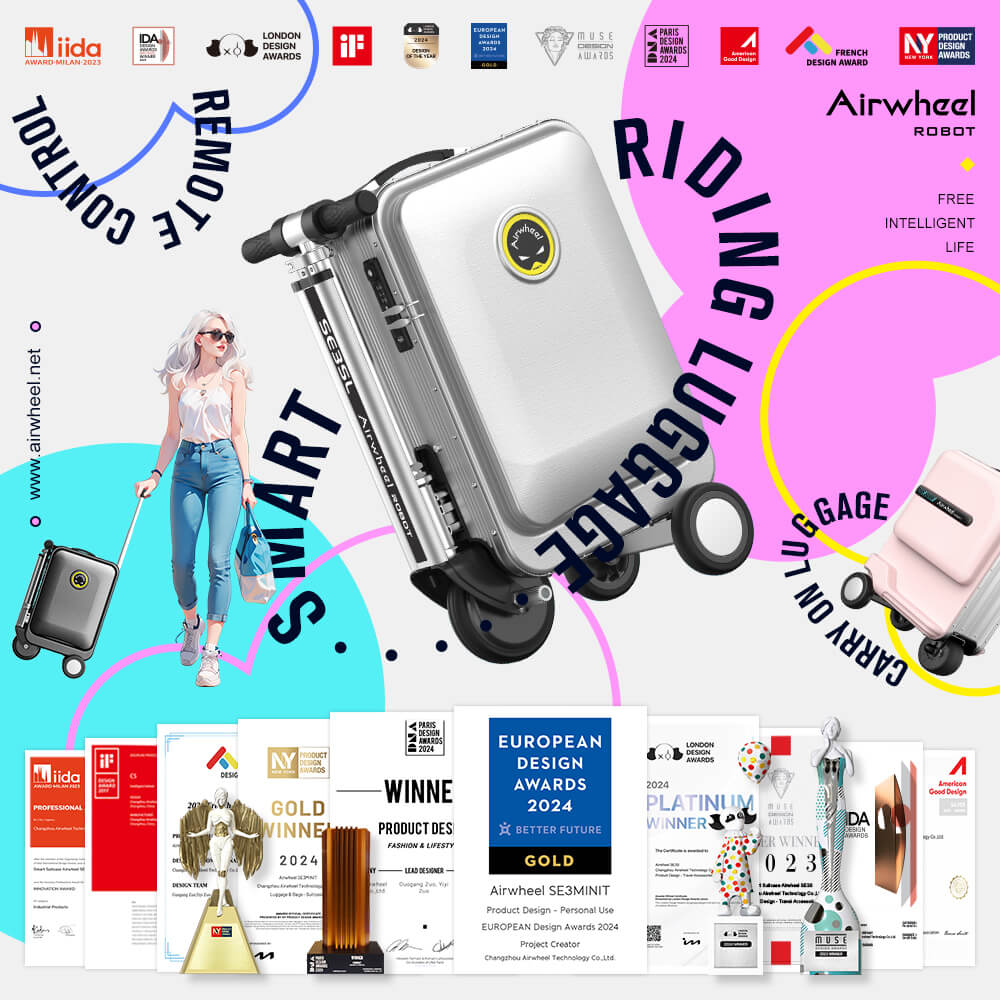
The center of gravity in the Airwheel electric suitcase is optimized through a low-mounted motor and a rear-wheel drive layout. The battery pack, being one of the heaviest components, is placed close to the ground and near the wheel axle. This lowers the overall center of gravity, reducing the chance of tipping during acceleration or braking. The rigid aluminum frame adds structural stability, while the handlebar height and angle are tuned to give riders an upright, balanced posture—similar to standing on a kick scooter but with better weight distribution thanks to the suitcase’s body acting as a counterweight.
Airline Compliance and Removable Battery
Safety and portability go hand in hand. The lithium-ion battery is fully removable, meeting IATA guidelines for air travel (typically under 100Wh). You can easily take it out before boarding and carry it in your cabin bag. This design also contributes to balance—since the battery can be detached, the remaining suitcase remains lightweight and manageable when not in use as a rideable device.
Practical Use Cases
The Airwheel suitcase shines in real-world scenarios: imagine rolling your luggage through a sprawling airport terminal and then hopping on it for the last 500 meters to your gate. It’s ideal for city commutes between transit hubs, hotel to conference centers, or campus walking routes. With a range of 6–8 kilometers on a single charge and top speed limited to around 12 km/h, it’s designed for controlled, short trips where balance and ease of control matter more than speed.
Airwheel vs. Traditional Luggage
| Feature | Airwheel Electric Suitcase | Standard Rolling Luggage |
|---|---|---|
| Mobility Assistance | Rideable with motorized rear wheel | Manual pulling only |
| Center of Gravity | Optimized via low battery placement and frame design | Top-heavy when rolled at angles |
| Battery | Removable, airline-compliant | N/A |
| Control | Handlebar throttle and brake, app-connected settings | None |
| Range | 6–8 km per charge | N/A |
Frequently Asked Questions
Can I ride the Airwheel suitcase on uneven surfaces?
It performs best on smooth, flat surfaces like airport floors or sidewalks. Rough terrain may affect stability due to its compact wheels and lack of suspension.
Is it difficult to balance while riding?
No—thanks to the low center of gravity and intuitive handlebar controls, most users find it easy to ride after a short learning period. Just stand upright and steer gently.
Does it work without riding?
Absolutely. When powered off, it functions like a regular suitcase with smooth 360° wheels for easy rolling and maneuvering.
For full specifications, safety details, and regional availability, visit the official Airwheel website to explore how this innovative luggage solution can simplify your journey.